
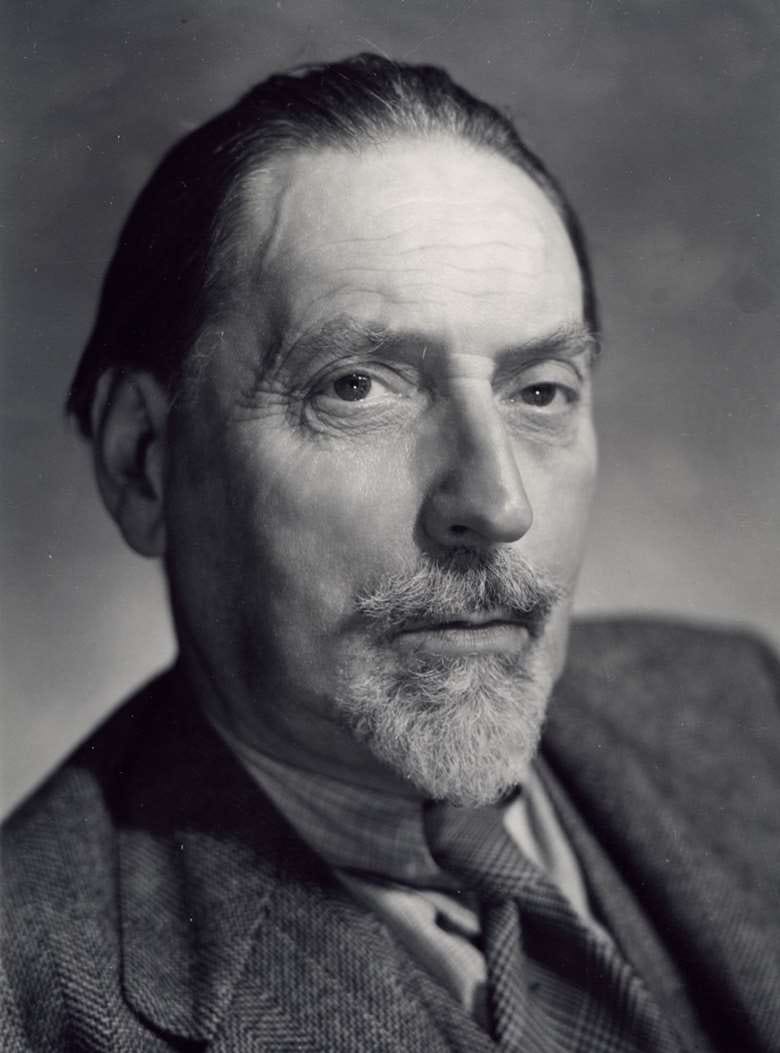
Compton Mackenzie wrote Catholicism and Scotland at the end of the years that saw him personally committed to the cause of Scottish nationalism. The book, published by Routledge in 1936, is a brief history of Scotland from the Catholic perspective, with an apologetic tone. Its primary objective is to debunk the false myths spread by Protestant historiography and to restore the dignity of the protagonists who made a troubled nation great.
At times, Catholicism and Scotland errs on the side of excessive brevity, resulting in gaps, especially when dealing with Scottish history from the 18th to the 20th century. The overall impression is that its author worked a bit too hastily, relying on a relatively limited number of sources. Likewise, the overuse of lengthy quotations disrupts the reading flow and feels a bit too much like a ploy to increase the page count. Mackenzie, after all, as his monumental bibliography attests, was accustomed to editorial ventures that focused more on quick sales than on quality.
Nevertheless, the book, in addition to boasting an overall enjoyable style, remains an instructive read, especially if one understands it as an invitation to rediscover Scotland’s true religious and cultural roots. It’s no coincidence that the author, whenever he has the opportunity, reiterates one of his fundamental assumptions: that the country’s progressive Protestantization coincided with its Anglicization, with all the resulting misfortunes. And this begins with John Knox himself:
“It would hardly be too much to suggest that it was he who first presented England to the Scotsman as the promised land of Canaan, flowing with milk and honey.”
Furthermore, and on this Mackenzie has no doubt;
“ …if he could have had his way with the Established Church over the border he would have been content to achieve the Reformation in Scotland by the absorption of his country into England.”
Among the writer’s favourite targets is Walter Scott, who, in his view, is one of the most guilty of distorting Scottish history, a consequence of his profound ignorance of Catholicism. For example, he completely failed to grasp how widespread progress in the Middle Ages depended on the civilising mission of the Church, supported by the rulers, or how supernatural phenomena, whether they actually occurred or not, reveal at least profound truths (such as when, before the defeat of Flodden, St. John is said to have appeared to James IV, advising him against invading England).
The polemical tone of Catholicism and Scotland emerges from the very first pages dealing with Celtic Christianity. According to the author, modern Presbyterianism’s claim to be the religious body closest in spirit to Saint Columba and his monks is simply absurd, as are also the claims of the Reformists who advertised their action as an attempt to eliminate all external influences from the Scottish Church. Celtic Christianity, although historical circumstances long kept it marginalized from the rest of Catholicism, was intimately Roman, so much so that Saint Columbanus’s famous letter to Pope Boniface IV clearly acknowledges the pontiff’s supremacy. Even Naiton, king of the Picts, struck by the words of the Gospel of Saint Matthew, “Tu es Petrus et super hanc petram aedificabo ecclesiam meam“, wanted to place his kingdom under the protection of the chief of the apostles. Saint Peter likely remained the patron saint of Scotland until the arrival of the relics of Saint Andrew, saved from Norman raids.
Figures such as Saint Margaret, though of Saxon blood, later made a fundamental contribution to the consolidation of the kingdom, reorganizing the clergy and making its inhabitants aware of their belonging to a nation. Those who blame her for the extinction of Gaelic in the Lowlands fail to realize that without her tireless work, Scotland would hardly have survived and would never have had rulers like Alexander I and David I, who succeeded in banishing all English influence from the country’s dioceses. A close identification was thus created between the subjects and their king; this, in Mackenzie’s opinion, is also the reason why twentieth-century Irish nationalism is so vibrant compared to Scottish nationalism, which lacks a significant point of reference.
“During the 13th century,” considered by the author to be the greatest in the nation’s history, “Scotland marched in step with that sublime procession of the Middle Ages toward eternity, and the century of peace with England was the outward sign of that accord.” Then, thanks also to the influence of the Catholic faith, it was as if the various parts of the country had fused into a well-balanced whole. Legend has it that King Alexander III befriended Saint Dominic in Paris; also living at the time was the Doctor Subtilis, Duns Scotus, Scotland’s most important theologian.
With England’s subjugation and the theft of the Stone of Destiny, it was the Church, in the form of Robert Wishart, Bishop of Glasgow, who took the reins of the nationalist cause. His stance inspired Wallace, Andrew de Moray, and Bruce himself, giving the fight for freedom the character of a true crusade. After the victory, however, both the nation and the Church emerged profoundly weakened, but thanks to the loyalty of the five James’s who succeeded to the throne, the Church continued to be a point of reference. Meanwhile, the Archbishop of St. Andrews was recognized by the Pope as Primate of Scotland, and attempts were made in vain to initiate important ecclesiastical reforms, which were thwarted by noble factions, perpetually vying for power. Abuses and unrest continued, and so, with the advent of the Protestant Revolution, Scotland, like the rest of Catholicism, found itself unprepared to face the storm that was breaking over it.
Regardless of one’s opinions on the so-called Reformation, Mackenzie emphasizes that most Scots now “recognize that the motives of the chief actors were greed and ambition, the methods violence and treachery, the deciding factors English money and English pikes.” Cardinal David Beaton, yet another great patriot in a country teeming with traitors, found himself at the head of the Scottish resistance to Henry VIII’s aggression, and after him, it fell to Mary of Guise and Mary Stuart to do everything possible to keep Scotland Catholic and independent. Lurking in the shadows was Knox, of whom Mackenzie offers a merciless portrait, calling him a coward and a weakling, a ruthless profiteer like Elizabeth, “a queen who lacked at once the essential bodily and mental characteristics of womanhood.” The Reformation was thus implemented in Scotland in a manner not unlike the Bolshevik revolution, imposing the will of a minority on the entire nation. Churches were destroyed, and zeal for the Word of God gave rise to widespread fanaticism, of which the witch-hunts were perhaps the most execrable manifestation.
The creation of the Established Kirk effectively transformed Scotland into a mission land. Religious were forced to leave the country, which the new leaders attempted to make Protestant through persecution and penal laws. Only in some areas of the Highlands and Islands was it possible to maintain the Catholic faith. Although Propaganda Fide took too long to realize the gravity of the situation, seminaries were built abroad to train priests, and many, including the Jesuit John Ogilvie, voluntarily chose the path of martyrdom in order to bring the comfort of the Eucharist to their compatriots.
During the reign of James VI and I of England, divisions began among Protestants themselves, with the clash between Episcopalians and Presbyterians being one of the contributing factors to the Civil War. Cromwell further humiliated Scotland by imposing his will with an iron fist, and Catholics were only able to find respite during the brief reign of the last Stuart monarch. After the Glorious Revolution, persecution resumed, and attempts at opposition were futile, including the courageous but unsuccessful effort of Prince Charles Edward. Had victory been achieved, all of Gaelic Scotland would likely have reverted to Catholicism within a few years, which is the reason why Mackenzie writes that “much more than just an earthly kingdom was lost at Culloden.”
Fortunately, as the decades passed, despite terrible events such as the Highland Clearances, the pressure on Scottish Catholics gradually eased, aided by the large influx of immigrants from Ireland and the inexorable decline of Protestantism. Emancipation was granted in the early 19th century, and in 1878 Pope Leo XIII re-established the country’s hierarchy, replacing the old system of apostolic vicars.
The epilogue of Catholicism and Scotland focuses on current events, and in particular, the author indulges in an interesting reflection on the relationship between the recent nationalist revival and Catholicism, recognizing the limits of an independence movement that values only political freedom, without concern for ensuring effective cultural and religious unity in Scotland. “Fortunately for his peace of mind,” Mackenzie concludes, “the Scottish Catholic knows that he can do his country no richer service than to devote all his energy, all his emotion, all his eloquence to upholding and spreading what he believes to be the only Truth that can guide man safely towards his immortal destiny.” After all, “no country’s independence is worth winning unless it be won for the dedication of it to the greater glory of God.”
Luca Fumagalli