
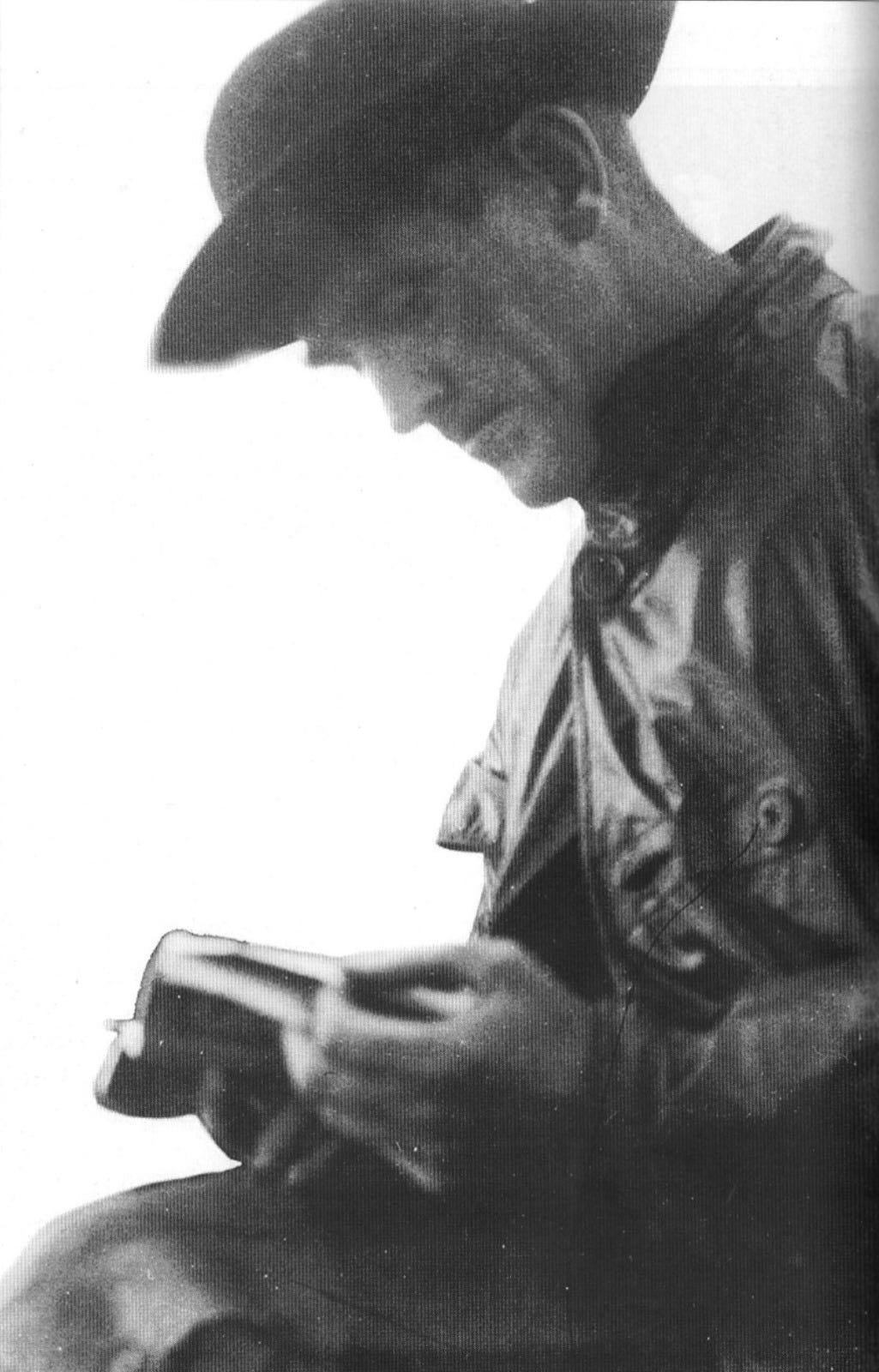
Catholic parish priest, Gaelic poet, and folklore expert, Father Allan MacDonald was one of the most fascinating personalities of the Hebrides over the last two centuries and probably the most esteemed ecclesiastic in northwest Scotland after Saint Columba.
Born on October 25, 1859, he was the third of five children of John MacDonald and Elizabeth MacPherson, originally from Torlundy and the daughter of a farm manager. His father came from a family of carters and escorted carriages through the Highlands, from Loch Lomond to Fort William. He was a direct employee of the post office, and his job was to prevent mail from being stolen. When he married in 1852, he gave up his job and used the money he saved to buy a tavern overlooking the main street of Fort William.
The city was located in a relatively wealthy area, reliant on trade and tourism, and young Allan, named after his paternal grandfather, had the opportunity to grow up in a healthy and peaceful family environment. His father, a proud representative of the middle class, cherished aspirations for his children, and it is no coincidence that he wanted to give them an education in English, the language of commerce and empire, setting aside the Gaelic spoken by the majority of the population. Religiously, however, he held more traditional views: he was a Roman Catholic, proud to belong to one of the clans that had supported Bonnie Prince Charlie, the young pretender who in the eighteenth century attempted in vain to re-establish the Stuart succession in Britain.
Between 1867 and 1868, when Allan was still a child, the Church of the Immaculate Conception, the first Catholic chapel in Fort William, was built, and the MacDonalds were among the first to receive communion there. Later, the boy attended the Fort William Roman Catholic School, run by a local priest and teachers mostly women, which provided him with a solid education in subjects such as Greek, Latin, French, English literature, and mathematics. The professors quickly recognized his potential and invited him to continue his studies at St. Mary’s College, Blairs, a minor seminary near Aberdeen, where the young MacDonald transferred in October 1871, shortly before his twelfth birthday.
Donated in the early nineteenth century to the Catholic bishops of Scotland by a wealthy member of the faithful, Blairs College, as it was commonly known, was at the time a rather small institution, housing students from not only Scotland but also England and Ireland. MacDonald was an intelligent and receptive student, but he resented the Spartan regime imposed by the rector, the Reverend Peter Joseph Grant, which contrasted with the cheerfulness he had experienced at home and in the small community in which he grew up. The school placed ample emphasis on the teaching of modern languages such as French, Spanish, and Italian, because a large portion of the students would continue their studies at one of the Scots Colleges on the continent, established during and after the Reformation. Conversely, Gaelic was not particularly encouraged, and so MacDonald, who wished to speak it fluently, was forced to study it on his own, encouraged, among others, by Father James A. Smith – the future Archbishop of St. Andrews and Edinburgh – who also instilled in him his passion for philology. John Mackintosh, his classmate and future priest, who became his lifelong friend, also supported him.
After the death of both his parents, in September 1876, MacDonald was encouraged by his professors to continue his studies abroad. He chose Spain, more precisely the College of San Ambrosio in Valladolid, where he quickly adapted to a congenial environment, less harsh than the other institutions he had attended up to that point (the only trial was having to get used to the local climate, decidedly different from Scotland’s). Another stroke of luck was that the new rector, besides being a supporter of Neo-Thomism, encouraged his students to learn and practice Gaelic. Many of them, once ordained, would in fact serve in parishes where Gaelic was the first language and often the only one spoken and understood by the faithful. These communities had been incorporated into the newly formed Diocese of Argyll and the Isles, created following the restoration of the Catholic hierarchy in Scotland in 1878, and MacDonald, who at heart felt himself a proud son of the Highlands, could not have hoped for a better destination.
And so it happened: in 1882, after being ordained a priest, he was sent to Oban as assistant to Bishop Angus MacDonald. Although very few Catholics lived there, one a fisherman who introduced Father MacDonald to traditional Gaelic hymns and Hebridean folklore, the town had the great advantage of being well connected to the north-western islands and, at the same time, not too far from the archdioceses of Glasgow and Edinburgh. It was also the closest coastal town to the sacred island of Iona, the starting point from which Saint Columba, in the sixth century, began his preaching in Scotland.
After two years, Father MacDonald was offered a teaching position at Blairs College. He was almost inclined to accept, but when he learned that the community of Daliburgh, in the southern part of the island of South Uist, had recently lost its parish priest, he changed his mind and, packing his bags, moved there without hesitation.
South Uist, with a population of 3,600, mostly farmers, was one of those peripheral areas of Scotland where, with very rare exceptions, the people had always maintained the old faith, resisting the blandishments of the reformers. For them, Gaelic identity was part of a millennia-old bond with the Celtic Church, and for a priest, it meant finding himself working in a safe and welcoming environment that existed nowhere else in the country. Thus it happened that Father MacDonald, like his predecessors, easily integrated into the new environment, appreciating its rhythms and customs, and eventually representing his faithful even in political contests (in 1888, he was even elected to the island’s School Board). Tensions were not lacking, not only because of the effects of the Clearances of the previous decades – the forced and mass eviction of the rural population to benefit a handful of landowners – but also because the entire chain of Catholic islands in the Outer Hebrides, from Barra to Benbecula, was then under the control of Lady Gordon Cathcart, an aristocrat who exercised her prerogatives without too many scruples.
Father MacDonald landed on South Uist in the summer of 1884 and occupied the rectory near St. Peter’s Church, in what was then the largest of the island’s three Catholic parishes. The elderly Father Alexander Campbell, who would die only nine years later, and whom the bishop wanted to work alongside him to instruct him in the islanders’ customs and traditions, as well as to strengthen his Gaelic, welcomed him warmly. In his limited free time, Father MacDonald enjoyed long walks and climbing hills, or he fished, both in the sea and in the lochs. He also loved music, was an avid reader, and became an amateur archaeologist, exploring the prehistory of South Uist. Around 1887, after three years in the Hebrides, he began collecting information on local folklore, and a couple of years later he compiled a Gaelic hymnbook, which included a commentary on the sung Mass in the Highland and Island language. As might be expected, this work earned him a certain fame among late-Victorian enthusiasts of Celtic culture, some of whom came knocking at his door. Apparently, some even took advantage of his availability, stealing some of his notes and publishing them as their own.
In 1894, due to increasingly evident physical and mental fatigue, MacDonald was moved to Eriskay, a decidedly less demanding parish. Except for two or three perfectly assimilated Protestant families, the island’s 450 inhabitants, economically dependent on the sea, were Catholic, and almost all spoke Gaelic. In his rectory of Am Rubha Ban, the priest lived a frugal life, devoted to his duties and study. He also wrote sacred and secular poetry, songs, and hymns, and it was to Eriskay that he dedicated one of his finest poems, “Eilein na h-Òige,” or “The Isle of Youth.” Thanks to numerous donations from across Scotland –among the many benefactors, there was Marc-André Raffalovich, a close friend of the priest John Gray – he also managed to build a new parish church, inaugurated in 1903.
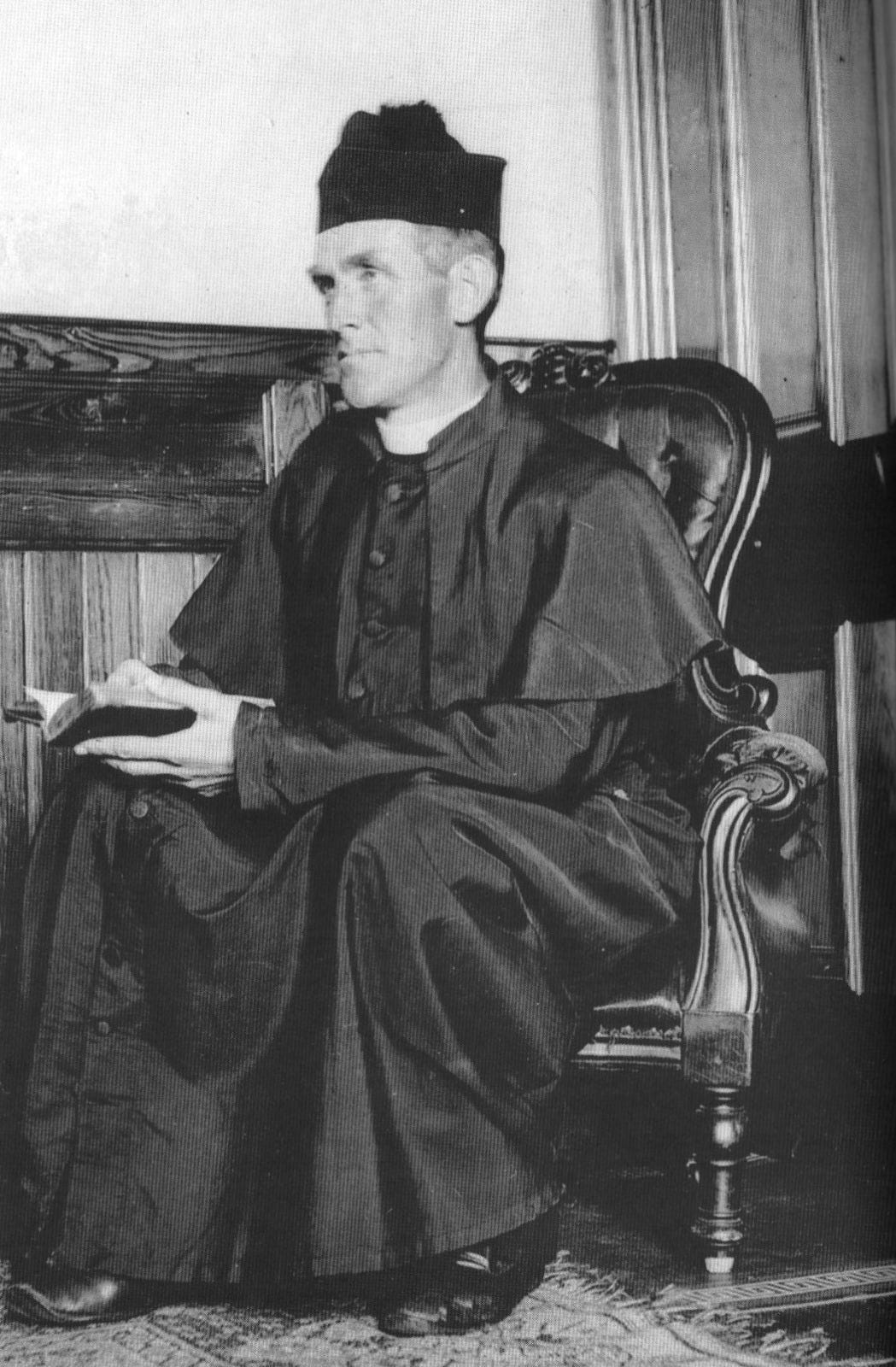
Father MacDonald, who by then had even become a character in a couple of novels, died on October 8, 1905, struck down by pneumonia that had degenerated into pleurisy. The funeral was unforgettable: no fewer than twenty-one priests crossed the waters of the Minch to be present, all the island’s inhabitants were in mourning, and the priest was buried amid the tears of strong men unaccustomed to weeping. Not only Eriskay but also a vast array of friends mourned the death of this heroic and humble parish priest, a remarkable scholar of Celtic culture and, above all, one of God’s greatest ministers in the history of the Hebrides.
By Luca Fumagalli