
The fall of the Soviet Union happened around the time of my birth. All of my experiences of politics and religion are marked by the post-Cold War search for new political narratives and global economic paradigms. My understanding of politics and religion have also been formed by the way my government, that of the United States, has chosen to exercise its hegemony over any part of the globe that it desires. From Panama to Venezuela to Iraq and now Iran, despite sporadic condemnations by the international community, the world’s undisputed superpower undertakes whatever operation it deems to be in its self-interest. In the years after World War II, Europe found itself economically and militarily dependent on the United States. Whatever moral resources it once possessed to push back against American interests (such as the French refusal to sign on to the 2003 Iraq War), now seem exhausted. The rules-based international order seems, at best, like a dead letter, and at worst, like an explicit instrument of European and Anglo-American hegemony over the Global South, the Third World, and possible rivals.
For Roman Catholics, it is easy to fall into reactionary right-wing diagnoses of these failures, especially when neo-imperialists like Vladimir Putin and ordoliberals like Viktor Orban make “Christian identity” part of their political project–religion as a buttress for social authoritarianism. There is a long Catholic history of monarchist and counter-revolutionary thought, opposed to egalitarianism and democracy; there is a reason why young, religiously sincere readers are turning to Joseph de Maistre, Louis de Bonald, and Carl Schmitt. Even less politically inclined Catholics are taken, through circuitous routes, from C.G. Jung to Perennialist and Traditionalist accounts of myth and the sacred, and then ushered directly into reactionary politics. These are precisely the circumstances and temptations that haunted Europe, especially Catholic Europe, in the 20’s and 30’s. And it is by rejecting these temptations, without losing the mystical core of Christian revelation, that Jacques Maritain developed his theological and metaphysical defense of cosmopolitan democracy.
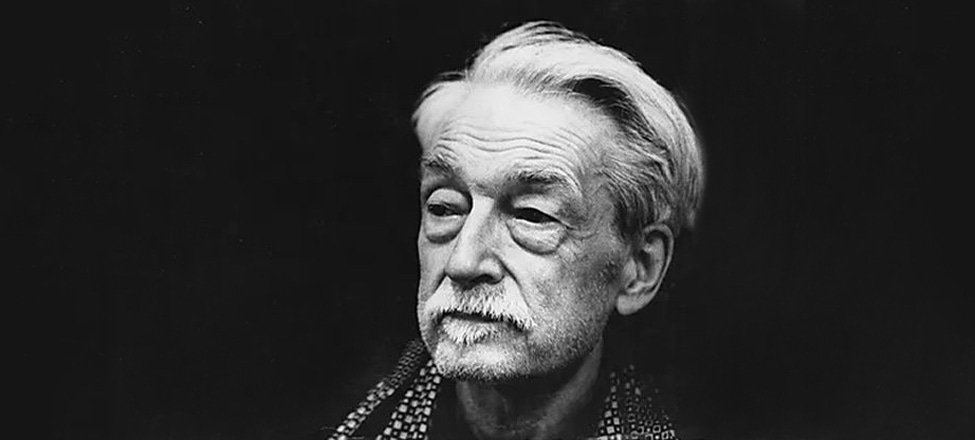
The life of Jacques Maritain (1882-1973) was one of constant activity, fueled by a seemingly boundless reserve of energy. The same unmistakable dynamism manifests itself in his writings, political commitments, and personal life. Like many of his generation, Maritain bore within himself the contradictions and tumults of a rapidly decaying social and economic order. This decay sometimes took the form of spiritual malaise and at other times took the form of violent and spasmodic catastrophes. He was alive during the close of the nineteenth century, studying the natural sciences as a young man during World War One and the Russian Revolution, at the heart of the Parisian intellectual and literary networks during the interwar period, active in the resistance movement during World War 2, an advocate for human rights and the United Nations in the postwar period, and personal friend and mentor of Pope Paul VI. His life measures a span that improbably contains the Dreyfus Affair and the Cuban Missile Crisis.
Like the historical periods he lived through, his own biography is a series of catastrophes and new beginnings. While at the Sorbonne, he, along with the brilliant Raïssa Oumansoff (later to become his wife), took immense pleasure and intellectual satisfaction from their scientific studies, but were horrified by the reductive naturalism appended to it by some of their teachers. If, as was sometimes indicated to them, spiritual life and consciousness itself was nothing more than epiphenomenal scum upon the silent waters of Nature, how could life be worth living? They were so harrowed by this realization that they made a suicide pact with each other. If, after searching through all available options, they had not found some intellectual path out of this positivistic dilemma, they made a promise to end their own lives. As if in answer to their secret prayers, it was then that they discovered Henri Bergson.
[…] applying these humanistic ideals to political economy could “be nothing more than the pipe dreams of an old fool. But after all, I’m not moving in very bad company; there was neither gold nor money in Plato’s Republic.” Jacques Maritain
It was through Bergson’s unique redeployment of German Romantic Idealism (Schelling and Hegel) as well as French Spiritual Realism (Maine de Biran, Felix Ravaisson) that Jacques and Raïssa were given a second life and new intellectual horizons. All of their later work rejuvenating the tradition of Aristotelian Thomism should be seen in light of these same sources–sources that also inspired thinkers as diverse as Alfred North Whitehead, Gilles Deleuze, Maurice Merleau-Ponty, and Emmanuel Levinas. The immediate influences on his conversion to Roman Catholicism were also eclectic, including both the literary giant Leon Bloy and the grand old duke of Neothomism, Reginald Garrigou-Lagrange. Maritain is (rightly) associated with Henri de Lubac, Yves Congar, Josef Ratzinger, Hans Urs Von Balthazar, and the rest of the Ressourcement, but his philosophical and theological milieu was astoundingly diverse. He drew on every source available to him.
These biographical details of his Parisian social context are important because, speaking as an American Catholic, the popular Maritain most often presented in conservative circles is that of Michael Novak and George Weigel. The tremendously complex and dynamic Maritain is cribbed and cramped until he fits the mold of the North American neoconservative: champion of capitalism against communism and ready resource for every Republican association that wishes to clothe itself in Catholic intellectual respectability, from the American Enterprise Institute to the Federalist Society. The truth is that Maritain ran the gamut of political options, including an early dalliance with more reactionary currents of French counter-revolutionary thought. This path from reactionary anti-democratic and anti-egalitarian politics to emancipatory politics was not uncommon in interwar France (see for example the life and thought of Maurice Blanchot). When his thought matured, Maritain became one of the fiercest critics of fascism, Nazism, anti-semitism, and racism in the entire Catholic world–including during the crucial years leading up to World War 2 and the fight against the grotesque evil of Hitler and Mussolini. He did not refrain from condemning Catholic statesmen either, publicly opposing Francisco Franco and his regime. His opposition was so public that it prompted one of Franco’s ministers, Ramón Serrano Suñer, to declare Maritain’s thought to “have accents that recall the thinking of the Elders of Zion and he has the false style of Jewish democrats.” It is probable that his own temptations toward a reactionary Catholic political theology was precisely what primed him to become a uniquely valuable Left Catholic critic of religious fascism, empire, and capitalism.
In 1943, during the maelstrom of the largest global conflict known to human history, Maritain wrote a slim volume called Christianity and Democracy. In it he makes a concise case that the Catholic Church should reevaluate the false binary that has explicitly and implicitly governed ecclesial statements on political theology from the trauma of the French Revolution in 1789 through the Syllabus of Errors. In no uncertain terms, the Church had consistently and repeatedly rejected or heavily restricted the rights of man as proposed by revolutionary liberalism. Most famously, the Church at its highest levels continued to condemn the right of religious freedom as a grave moral error. Even Leo XIII, (who was quite the moderate on social issues compared to Pius IX) framed the political and economic struggles of his time as suffering from too much consideration of the “rights of man” and not enough of the “rights of God.” But instead of imagining God as a very large Subject with the Biggest Rights of All, Maritain argues for a non-competitive framing and proposes an alternative reading of modern history and its convulsions.
Maritain does not hesitate to affirm the ideals of the French Revolution as truly Christian ideals and rejects any position which would try to reverse its genuine political and social gains. “Ever since the French Revolution and the effusion of secularized Christian idealism which it provoked in history, the sense of freedom and the sense of social justice have convulsed and vitalized our civilization; and one would need to have the soul of a slave to wish from the destruction of this very sense of freedom and justice on account of the suffering and disorder it may have occasioned. In short, at the same time that there fructified in the modern world the evils whose seed this world bore within itself, the natural growth of civilization and the inner work due to the evangelical ferment continued within it.” Maritain, of course, always rejected any utilitarian calculus of sacrificing human beings for some supposed future goal and he condemned Soviet Communism in no uncertain terms. However, like Marx and the Frankfurt School, he saw the gains and losses of modernity as a deeply dialectical progression, non-linear yet real.
Unlike Marx and the Frankfurt School, he perceived that the ultimate source of this liberation and advance of human dignity must come from and implicitly already does come from the Trinitarian mystery revealed in the Incarnation of Jesus Christ. The choice of a democratic regime may not be Catholic dogma or a direct aspect of the preaching of the apostles but it is the indirect and inexorable result of the temporal leavening of the world through the Gospel. The horrors of modern industrialized war, faceless totalitarian states, and technology distended and divorced from human flourishing causes many to yearn for a pre-modern age and falsely assume that humane life only comes through authoritarian, aristocratic, monarchical, or paternalistic forms of life. Maritain calls this temptation “a regression to a perverted aping of the Ancien Regime or the Middle Ages” and exhorts all of us to seek a “a new and truly creative age, where man, in suffering and hope, will resume his journey toward the conquest of freedom.”
Yet, unlike anti-clerical and atheistic forms of politics, Maritain refuses to surrender the heritage of the Christian medieval or even pre-Christian classical worlds. There are other ways of reverencing history and tradition than mere repetition. Maritain sees the victory over the Axis as only the beginning of the task of a truly Christian politics–one which will demand an integral humanism and seek thick substantive goods for communities, not simply atomized existences enslaved to consumer choice and abstracted from any real self-governance or pursuit of material and intellectual excellence and flourishing. It is in this spirit that he calls for “a resurrection of spiritual forces, a new knighthood emanating from the peoples.”
Maritain is clear in his rejection of positivism; he consistently points out the catastrophe of an age that rejects metaphysics. But what does he see as the immediate causes of political and economic deformation in the modern world? He does not leave his analyses in the clouds: instead, he names the social forces that compromised modern democracy. His decline narrative directly points to “the advent of the bourgeois class, the capitalist profit system, the imperialistic conflicts and unbridled absolutism of the national States.” Even more precisely, he blames the tragic failure of modern democracy on the coalition that was formed “between the interests of the ruling classes, corrupted by money, desperately clinging to their privileges and crazed by a blind fear of Communism (the spread of which could have been prevented only by a clear-sighted policy of social reform)...” as well as “sadistic racists, drunk with the joy of using the spirit to betray the spirit.”
While in exile from France, Maritain started an experimental university in New York. Jacob Saliba, working at the University of Notre Dame’s Jacques Maritain Center has uncovered archival records that shed light on the truly global scope of his Christian humanism. “Even before his reflections on American racism during the Civil Rights Movement and ahead of Edward Said’s celebrated work on anti-imperialism, Maritain played an active role in decentering a white European politics of the colonial world. Just after the liberation of North Africa from German hands in late 1942, Maritain delivered a presidential address in which he used the recent military success as a backdrop for arguing for a new Christian model of peace and justice. Keen to realize his words in action, Maritain soon after organized the “Projet de réponse aux questions d’Alger” (“Project in Response to the Question of Algeria”), a solidarity effort between the university, Free France, the University of Algeria, and European diplomats to promote Algeria as the next hub of global politics.” His anti-colonialism also led him to include the study of Latin America in his experimental university–even funding the now famous work of Claude Levi Strauss in Brazil which led to the formation of structural anthropology. His vision of emancipation cannot be separated from his search for a global humanities set against the barbarisms of racism, anti-semitism, empire, fascism, and money.
In many ways, Maritain’s dialectical approach to politics rooted in theological mystery is structurally similar to the thought of Russian Sophiology and the conviction of Vladimir Solovyov and Sergei Bulgakov that history has a Chalcedonian structure. And, like Gustavo Gutierrez and the tradition of Liberation Theology, Maritain is convinced that in order to recover herself, Europe and America must be divorced from their past imperialist legacies and current financial neo-imperialist structures. Political Catholicism must seek to mirror more perfectly the global Catholic Church and seek an integral cosmopolitanism beyond market forces and the imperial threats of war and extraction.
He is justly remembered as an inspiration for the UN Declaration on Human Rights, a keystone of the postwar order. We should not forget the role natural law and Christian tradition played in its formulation. Yet for Maritain, global human rights were a procedural minimum, not a replacement for substantive relations of social and economic justice. The final years of Maritain were particularly focused on theorizing some kind of escape from the imperialism of money and countering the titanic threat global capitalism poses to nature and the human spirit. In the American attempt to align Maritain with the Scottish Enlightenment and neoliberal economists like Friedrich Hayek, the radically democratic Maritain has been obscured. Few know, for instance, that Maritain was a friendly correspondent with the infamous democratic activist Saul Alinsky. Another instance of Maritain’s intellectual fearlessness came in 1972, when Maritain met with two members of the Institutum Parvulorum Fratrum Iesu who had spent seven years in Castro’s Cuba. His late essay “A Society Without Money” is the fruit of wrestling with Castro’s own anti-capitalist policies and an attempt to imagine a transition into a post-capitalist society without the authoritarian violence of Castro’s regime. For many, this may seem like a laughable eccentricity and a false start from an otherwise respectable man. Yet consider that each phase of Maritain’s life was punctuated by these “impossible” tasks: Vatican II and the U.N. Declaration of Human Rights are two indirect fruits of this utopian and herculean intellectual and spiritual effort. And as Maritain says at the end of this bold essay, perhaps applying these humanistic ideals to political economy could “be nothing more than the pipe dreams of an old fool. But after all, I’m not moving in very bad company; there was neither gold nor money in Plato’s Republic.”
In the 18th and 19th century, the papacy was largely opposed to democracy and egalitarianism. In that way, we can see the politics of Reginald Garrigou-Lagrange, the Neothomist whose works are gaining popularity in some circles, as a very traditional Catholic figure. He considered the Nazi-collaborator Marshall Petain a providential figure and sternly warned that resistance against the Vichy regime was a mortal sin for a Catholic. He even tried to get the writings of Maritain, his erstwhile friend, placed on the Index of Forbidden Books. The chasm between Garrigou-Langrange and Maritain is also the chasm between the political theology before and after Vatican II. The reform was real and it was hard won.
The eschaton will not be the aggregate result of human effort but the life of faith and the practice of theology is always political: we only have the choice of what kind of politics it will be. Politics, in turn, can never break out of the orbit of theological mysteries into an autonomous realm–even if it thinks it can. It is now the case that the papacy is one of the last institutions with global reach that still exhorts nations and people to follow international law, respect universal human dignity, and ensure solidarity with the poor and the physical earth, our common home. Catholics young and old have a choice: reignite the war against equality, democracy, and liberation or join Jacques Maritain in working for a critical Catholic modernity–a Catholic modernity that prophetically refuses the inhumanity of money over persons, the cynicism of empire and state-enforced religion, and the pseudo-mysticism of ethnonationalism. We pray instead for the kingdom of many nations to come, with our co-laboring, to establish itself on earth as it is in heaven as Our Lord taught us. For as St. Paul tells us, it is for freedom that we have been set free.
By Andrew Kuiper
Hey Andrew,
Great work on this piece. I strongly agree with your point regarding neoconservative readings of Jacques Maritain. I will acknowledge the limits of my own expertise here. I have read a good portion, though not all, of his corpus, and he strikes me as more of an enigma than someone easily categorized as “right” or “left.”
In all honesty, I think the Garrigou-Maritain split is somewhat overstated as a true chasm within Catholic political theology. Prudentially, they differ quite a bit. Garrigou, of course, was a monarchist. Still, they seem to operate from largely similar first principles.
On that note, Maritain’s political theology in The Primacy of the Spiritual is deeply traditional, which is why I was somewhat surprised by the passage you cited from Integral Humanism. I have not yet read that work. It makes me wonder to what extent the development of his political thought reflects a certain temperamental responsiveness to the events of his age.
As you know, he was initially associated with Action Française before its condemnation by Pius XI, something he reflects on in The Primacy of the Spiritual. In the decades that followed, particularly in the 1940s and 1950s, he seems to take a more optimistic and modern-friendly turn. Yet by the end of his life, in The Peasant of the Garonne, his tone is markedly more pessimistic and critical of modern developments. There, he famously warns against “the Church kneeling at the altar of the world” and critiques the post-conciliar implementation.
In short, I think he is stranger than most "conservative" readings of him, but I think he has a traditionalist streak that is underemphasized because of his enthusiastic opposition to right-wing fascist governments in Spain and France. Thanks for the consideration
Best,
Matthew
Great article. Very well written and researched. I know this Maritain.