

A country known for its rugged mountains and rolling hills, Scotland has a large amount of terrain that is unsuitable for building. This means that most of the land is uninhabited and makes for a rather sparsely populated nation. It is estimated that around 94% of the country remains unoccupied, and statistics from 2024 show that the population sits at roughly 5.5 million. Living in especially rural, sparsely populated areas can present some challenges such as being far from shops and supermarkets; a lack of public transport; and occupational difficulties. However, there are some positives that can be found in living in rural areas, including more tranquil environments; nature surroundings (with the added bonus of being without visual and noise pollution!); and a much more financially friendly way of life. Both blessings and challenges present themselves in a series of different ways to church parishes in rural environments, and I have interviewed three people with varied roles in parish living: a Sister of St. Cecilia from Elgin; a mission-focused resident at the Craig Lodge Family House of Prayer, Argyll; and someone with a long association to Nunraw Abbey, East Lothian. They all gave me some interesting insights into their experiences in rural parish living, outlining their own, personal takes on some of the peaks and troughs that come with the way of life. Rural parishes don’t always feature in stories that surround evangelisation, so it was important to get an idea of effective ways to spread the Gospel, missionary objectives, and how to propagate the faith outside of a busy location.
Nunraw Abbey
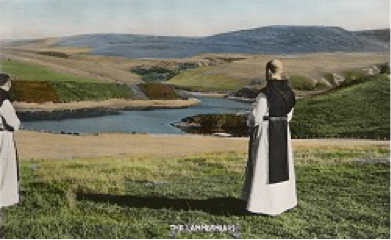
Sancta Maria Abbey (locally known as ‘Nunraw Abbey’) is run by the Order of Cistercians of the Strict Observance. The monks who have resided there over the years have dedicated themselves to contemplative living since 1946, when the monastery was founded. Nunraw Abbey itself isn’t a parish church, but Mass is celebrated there daily and on Sundays, and throughout the week there are other opportunities for worship, especially Vespers and Compline. I contacted someone with a long association with the Nunraw community, gaining some fascinating knowledge about the foundational days and establishment of the monastery, and about the continuing importance it has for those who worship there.
As I spoke with the local, he highlighted the sense of ‘belonging’ he has felt in the Nunraw Abbey grounds, suggesting that a spiritual home can be found in a contemplative environment away from the hustle and bustle of city living. Growing up within proximity of the monastery also provided many practical experiences, including hands-on work such as milking cows and herding sheep. These experiences were invaluable, as Nunraw was found to be a blessing during periods of hardship. “Later in our teens, my younger brother and I spent our summer holidays helping the monks build their new monastery, along with volunteers from all over the country” he said. This outlines the close-knit dynamic of the Catholic community and provides a closer look at how the community grew and developed, with volunteers giving their time to help build the Abbey over a period of several decades. It was at this time in Nunraw’s history that around sixty Brothers resided in the monastery.
Of the challenges that the rural parishioner met, one was that, not living in the town, he knew few people who actively attended Mass at the parish church, and so, did not feel part of that community. Another challenge was the “shortage of priests”, he states. Continuing, “But it does make a big difference to the soul of a parish”, the parishioner refers to the wider negative impacts on laity that frequent changes in clergy can cause, particularly where continuity and community are already fragile.
During the early 1980s, in the locality, there was an attempt to close a Catholic primary school, which he was at the forefront of trying to protect from closure. Speaking of the situation, the local stated, “Underlying the whole episode it felt like there was an anti-Catholic prejudice that sought to undermine Catholic education”. This highlights the concerns that he had regarding Catholic education in the rural space and serves as an example of a major disadvantage that can be found in a location that doesn’t receive much media coverage.
On the topic of mission objectives, Nunraw Abbey serves as a spiritual space, surrounded by nature, that extends a warm welcome to those drawn to prayer, and the Cistercian vocation of contemplation and hospitality.
“There is no need to go beyond the bounds of the monastery to spread the Gospel, it radiates from here,” the local says. “People come here and are made to feel welcome. They go away and spread the good news”. This encompasses much of what the Abbey values regarding mission, evangelisation, and practical faith. Nunraw Abbey acts as a centre where faith is expressed through prayer, hospitality, community living, and service, offering a rural environment and peaceful atmosphere that can draw people in and send them out again strengthened.
Visit their website here for news, information and some films.
Craig Lodge Family House of Prayer
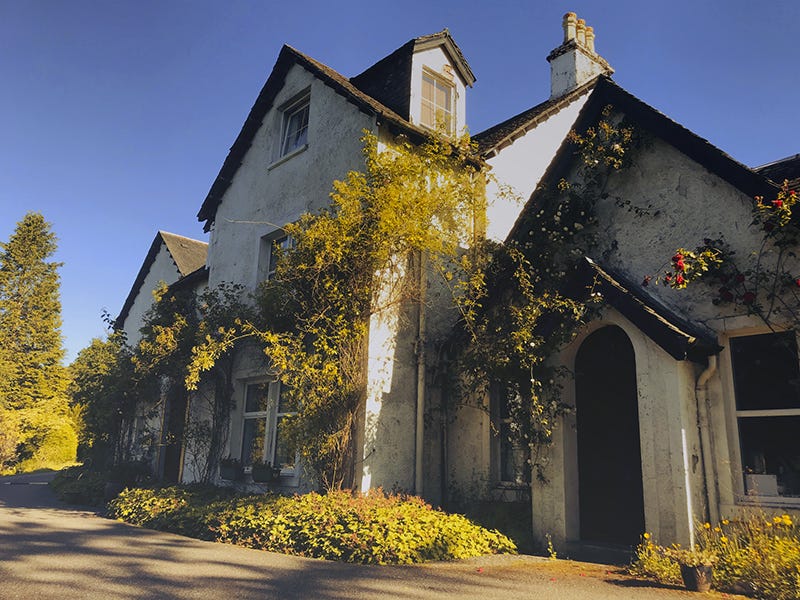
I spoke to Finley Allen, who is originally from Rutland in the East Midlands. After feeling inspired to go on retreat at Craig Lodge in Argyll, a break from the hustle and bustle of densely populated areas has proven to be fruitful spiritually. Talking to him, I managed to get a real sense of purpose in the way he reflected on his time spent at the Family House of Prayer. We spoke of transience in city environments, with some congregations feeling temporary in highly populated locations because of the coming and going of laity, the positives and the negatives of rural parish living, as well as the importance of missionary work, bearing spiritual witness and evangelisation.
Finley expressed a lot of joy for being a resident of Craig Lodge. He informed me that there are blessings in abundance in rural parish living, and one of them is the “rootedness” that he described, which in particular, refers to the “constants” in the parish who have been loyal churchgoers for decades. This, in turn, creates an authentic “family feel”, and it is invaluable in the growth of one’s faith. Luckily, in the surrounding areas of Craig Lodge, some parish priests have been engrained in their communities for a long time, as opposed to serving in fleeting ministries there. He also describes rural parish life as having more “purity” and “simplicity”, where it is easier for Christian’s to be the salt and light of the world that Christ called us to be. Thus, it is easier to have the positive, spiritual influence on the culture in the locality and beyond, when preserved from broader, city pressures.
For Finley, the blessings of rural parish life seem to outweigh its challenges. However, because of the sparse population, it isn’t as easy to form social connections as it is with the higher numbers found in cities. In densely populated locations, word-of-mouth spreads faster and social media use is much more prominent, which makes Christian events gain traction a lot quicker than they would in a rural location. Sometimes, this can be discouraging, as the parishioners in the local communities would like to see greater numbers. Speaking more on the topic, Finley said, “There is a human element that loves to have a room full of people worshipping the Lord,”. Besides that, he says that it is important for him to cling to the Lord, and remember that he was brought to Craig Lodge for a reason.
The topic of evangelisation is one very close to Finley’s heart. He stated: “The Holy Spirit meets every person at a certain time. The truth is received at an important time on one’s personal journey.” He has gained valuable experience having been on a mission placement for nearly a year, and it is important to him that he bears witness to the locals in the surrounding areas. As Catholics, it is very important to make people aware of Eucharistic Adoration – a practice that places the individual before the body, blood, soul and divinity of Christ, whether they have faith or not. This is done in Beauly. As a part of his and the teams evangelisation methods, they promote this devotional hour to encourage people to come and meet Christ where they are. Finley also has experience in sharing the Good News with staff in coffee shops and the local barbers, finding that a lot of curiosity is stirred upon his telling them about his missionary work – this evangelisation is gentle, but can be proven effective. “There’s an invitation to meet Jesus as He is the one knocking the door and the one they’re looking for”, he said, on the topic of sharing the news with strangers. Finley referred to the local churches in his rural environment as “little satellites”, that look to host Exposition of the Blessed Sacrament, build friendship, and to love as Christ loves. Paragraph 2126 of the Catechism of the Catholic Church reads: “The Church knows full well that her message is in harmony with the most secret desires of the human heart”, which is one that resonates with Finley the most, as it bonds humanity with what is at the heart of the message of the Gospel.
On the topic of rural, community-based evangelism, there is a group dedicated to mission work in Kilcoy, near Inverness, called ‘Scotland Awakening’. It is a designated space for worship before the Blessed Sacrament and looks to create new disciples in Christ. The Diocese of Aberdeen hold gatherings for people looking to attend.
Visit Craig Lodge's website here.
St. Sylvesters
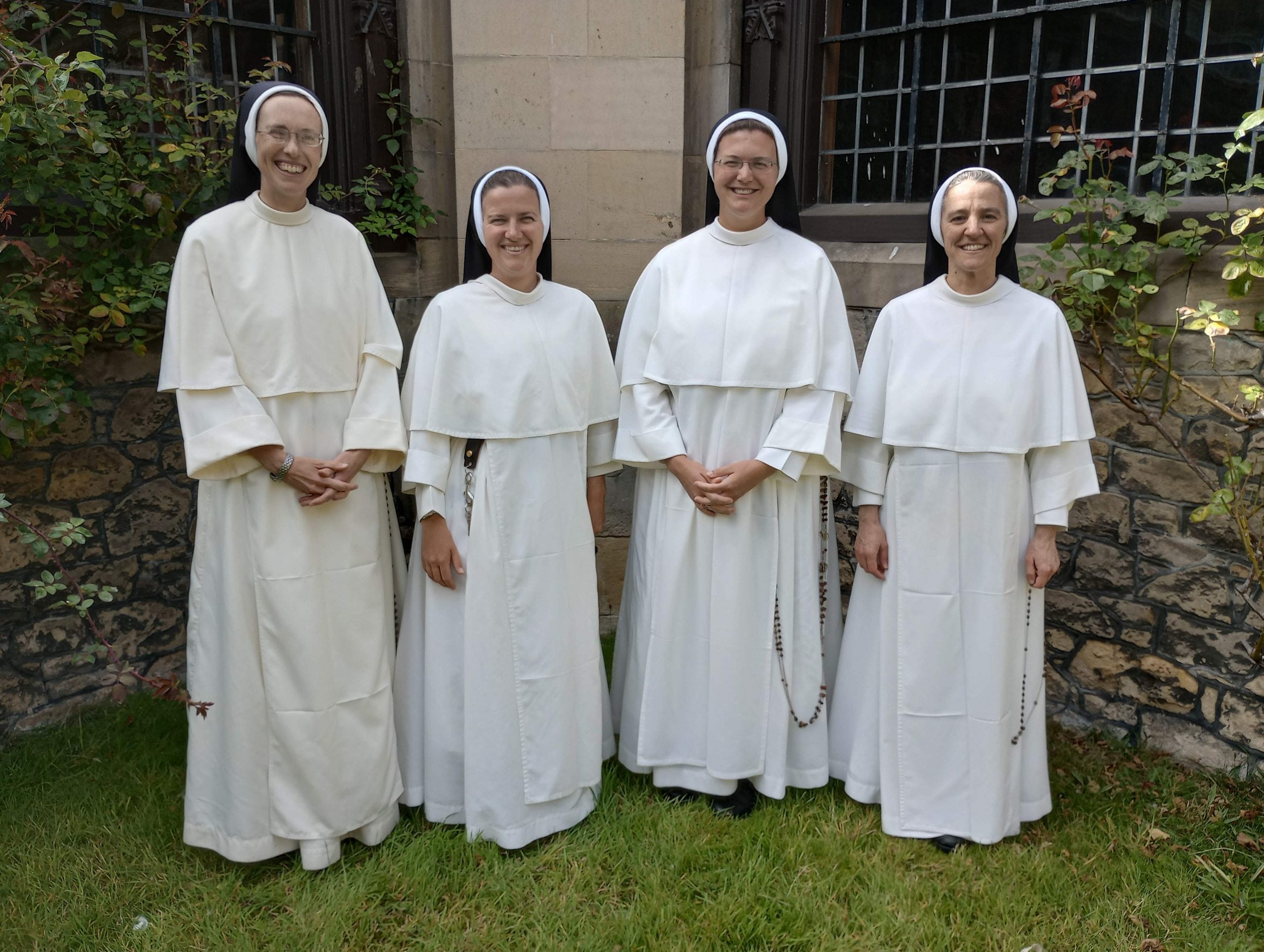
The Congregation of the Dominican Sisters of St. Cecilia operates in Elgin, Scotland, which is east of Inverness in the Highlands. The town itself has quite a high population, but it finds itself situated near rural spots that provide for contemplative living spaces. Sister Mary Gianna speaks a lot about the positives of living in Elgin, including how the rural environments around her have borne spiritual fruit. Sr. Gianna also addresses some of the challenges that come with being based in the countryside, away from mega cities, and what the mission objectives of the Dominican Sisters of St. Cecilia are in Scotland, as well as some evangelisation methods used in the Highlands.
We spoke first about the fruits that come with living in Elgin. “You get to know people… the energy is focused on the one area”, Sr. Gianna said. She highlighted that St. Sylvesters is not far from the countryside, and that people in the parish will make the effort to know you and will welcome you if you’re not a churchgoer there. The parish is close-knit, and with its population contrasting the larger numbers found in city churches, the parish “feels like a family”. Nearby is Pluscarden Abbey, which is inhabited by the Benedictines. The Sisters join them for Mass and prayerful reflection. The Abbey is situated in a very rural environment that makes for a contemplative, monastic lifestyle.
There can be challenges found in rural environments. Sr. Mary Gianna outlines that the Diocese of Aberdeen (which St. Sylvesters is a part of) is the second largest in Europe, and with all parishes being spaced out, connection can be challenging. This makes it hard for fellowship between churches. With the number of parishioners normally being small in rural parishes, Sr. Mary Gianna reflects on her coming to Scotland in 2017: “When we first arrived here, we were to be content with the small – Jesus knew the 12 Apostles would grow”. To grow the parish, the Sisters began youth groups and planted seeds, with them growing as a result. The Sisters don’t have access to all the same resources that a bigger city can offer, but their youth groups have all the essential components that are needed to thrive.
Coming from Nashville, Tennessee, Sr. Mary Gianna reflects a lot on her time spent in Scotland. Two of the many Dominican virtues of the are teaching and faith formation. As schools are generally state-run in Scotland, up in Elgin, the Sisters pursue the faith formation of young people outside of school settings and in groups. As a part of their mission statement, Sr. Gianna says that they were invited to Scotland to evangelise. “It is about being present in a community, living in the religious house and being available,” she continued, “Wearing habits is a reminder that God is with us and God is here. It directs minds to God, to Heaven, to the transcendent.” These words outline that wearing the habit can be a medium through which one serves as a visible witness to the faith, encouraging people to search within and find Christ around them. The Sisters have had opportunities to talk openly about their presence and mission in the local Elgin community. The ‘Be Active, Live Long’ group for over-60s asked the Sisters to talk about their lives; secondary schools in Elgin have asked for them to support religious education by speaking about Christianity; university chaplaincies across Scotland have requested them to give talks; and all of these provide an opportunity to share more about the apostolate of caring for and nurturing the souls around them.
Find our more here about the Sisters.
By Dhylan Livani